


What are AI Agents, and How are They Transforming the Way We Work?
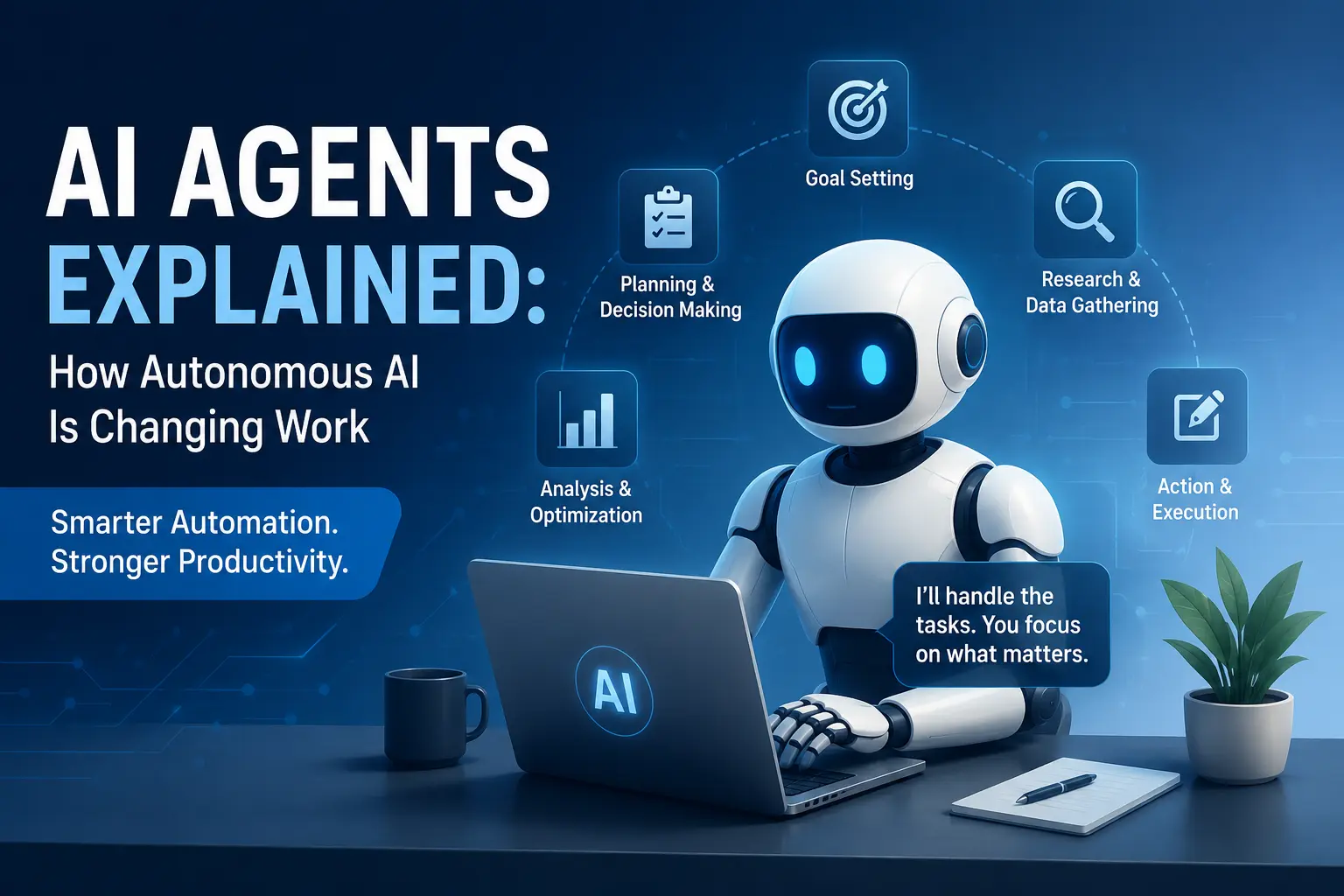

AI is no longer limited to answering questions and generating responses via a chatbot. The next big change involves AI agents: systems that should understand objectives, make decisions, and utilise digital tools to accomplish objectives, with minimum human involvement.
AI agents are already transforming several aspects of employees’ work, from solving customer queries in customer support to developing software in software development, and writing marketing materials to managing business operations. So what exactly are AI agents and why are they so vital?
What are AI Agents?
AI Agent is a software agent that can perceive, reason about, take action on and learn from a goal.
An AI agent can be programmed with a more general objective, as opposed to a normal Chatbot that normally waits for a prompt, and then reacts. It can then work out what steps it needs to take to reach that goal.
A business can, for instance, request an AI agent to write several calls to action for a single e-mail message, such as:
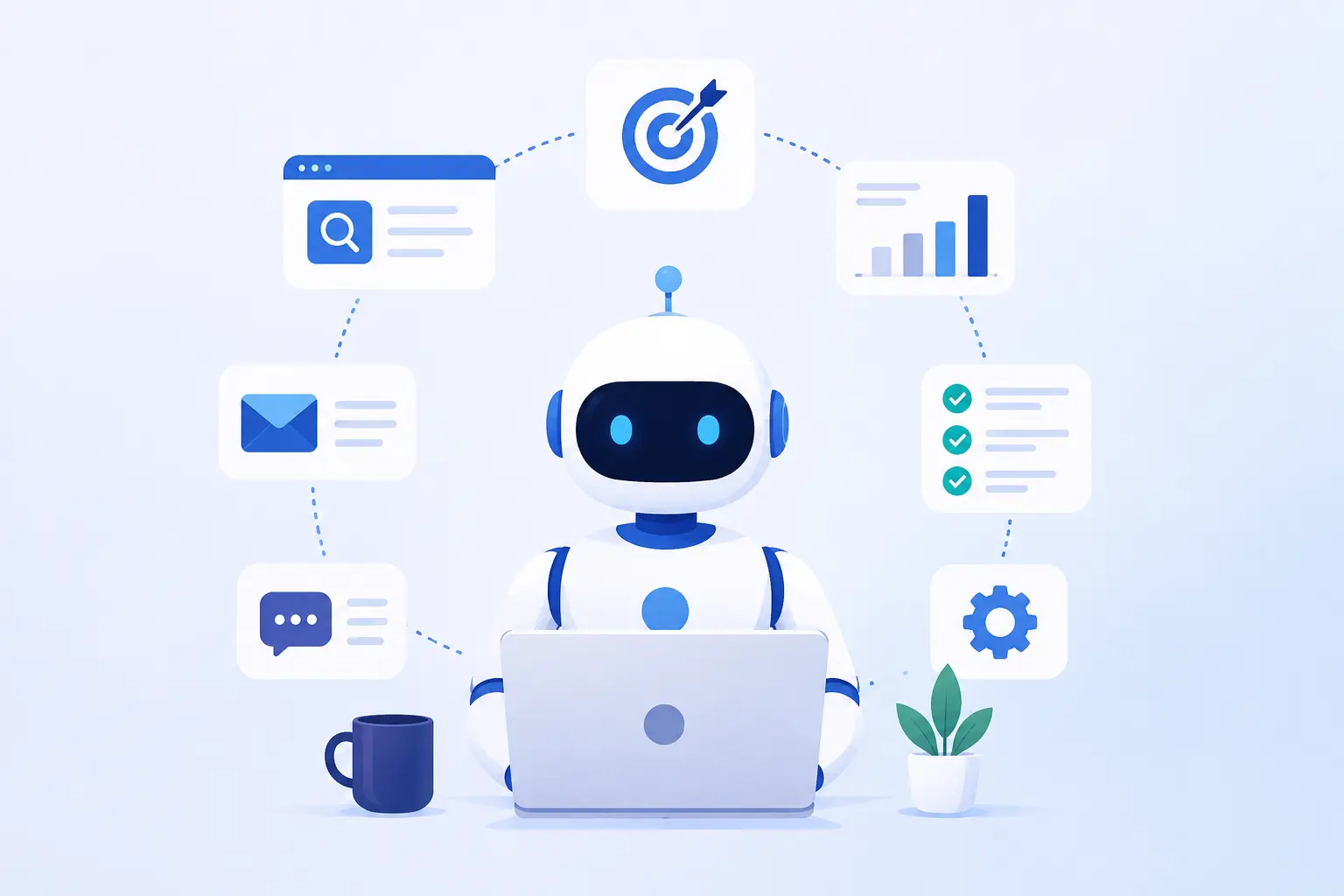
- Review incoming requests from customers.
- Identify urgent issues
- Search knowledge base
- Draft appropriate responses
- Update a CRM system
- Handle complex cases with human employees.
The agent is a digital worker that can do multiple steps in a workflow.
How Do AI Agents Work?
AI agents usually employ multiple technologies. A large language model gives the model reasoning and language capabilities, and integrations enable the agent to engage with software, databases, API, and other digital tools.
A simplified agent flow is:
Goal Planning Use of a tool Evaluation Action
Say an employee requests an AI agent to dig up information about the competition. The agent could check the internet for information, gather comparable data, arrange the data, compare businesses, and compose a record.
Under more sophisticated systems, the results of the system being evaluated can also be fed back into the system and the bad steps automatically repeated. One of the main advantages AI agents offer over traditional AI-powered assistants is this multi-stage functionality.
How AI Agents Are Changing Work
AI agents have the potential to revolutionize repetitive and tedious tasks in the business world.
-
Customer Support
The agents can respond to the general customer enquiries, fetch the account details, resolve issues and escalate to the humans for complicated cases. This means that support teams can concentrate on situations where they need empathy or expertise in making decisions.
-
Software Development
AI coding agents can read through codebases, pinpoint errors, generate and contribute to code writing, execute tests, and provide recommendations that facilitate code revision. The agent may not only generate a code snippet, but he can assist in your entire development project.
-
Marketing
Agents are valuable tools for marketing teams looking for research that helps them learn details about just how their competitors are marketing, how to keep their campaigns superior to those of their rivals, how to think up ideas for marketing content, how to recognize patterns and trends, and how to manage customer data. This leaves human marketers in a better position to focus on strategy and creativity.
-
Administrative Work
AI agents can help minimize repetitive workloads in a variety of other areas, including scheduling, data entry, document processing, report generation, and information gathering.
AI Agents Offer Several Advantages
This is the main benefit of automation of multi-step tasks. Traditional automation tends to rely on set rules, and AI agents can process information, formulate thoughts, and adapt to new information.
Businesses can enjoy quicker workflow, reduced operating costs, better productivity, and better employees’ time on high-value tasks.
AI agents can also function around the clock, which is beneficial for monitoring systems, accepting requests, and executing repetitive tasks during off-peak hours.
What Are the Risks?
None of the AI agents is flawless. Their error risks include making wrong choices, misinterpreting directions and relying on information that may be misleading. Providing an artificial intelligence system with private company information or critical business systems also poses challenges with cybersecurity and privacy.
Therefore, human oversight continues to be vital, especially for financial, legal and security-related decisions, etc.
Organizations need to define permissions, watch agents, and let them know that any critical actions they do must be approved by humans.
The Future of AI Agents
AI agents are expected to be woven into everyday software, with more and more tasks and features becoming automated.As time passes, AI agents will increasingly be embedded in the day-to-day software that we all use. Employees might be able to describe what they want to do, and have AI agents do the actual work of performing a function in many cases instead of needing to open several apps and complete the process manually.
So the next war of work is not humans versus AI; rather, it’s about how humans can best engage with AI.Work is on the horizon – but will it be humans versus AI? The more realistic model is a collaboration between human beings and the AI agents, where the humans are in charge of making judgment, creativity, context and oversight while the AI agents are in charge of repetitive digital tasks.
As the technology evolves, knowing how to operate and handle AI agents might be a valuable ability for business people and professionals.