





What Is Generative AI and How Does It Work?
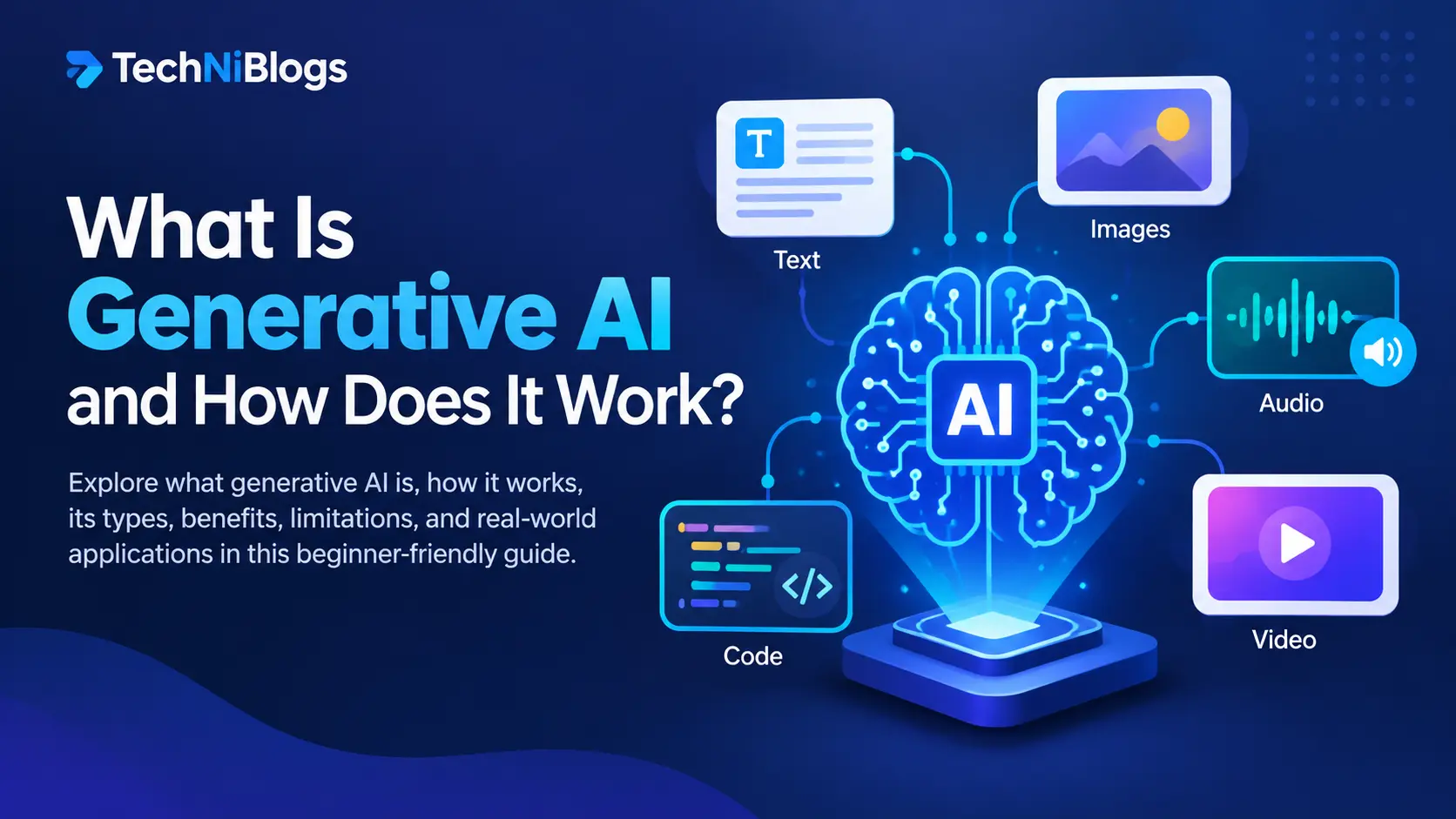

Generative AI has quickly become one of the most talked-about technologies in the world. From creating images and writing articles to generating computer code and producing realistic audio, generative AI is changing how people work with technology.
But what exactly is generative AI, and how does it work? In this guide, we’ll explain generative AI in simple terms, explore how it works, and look at some of its most common applications.
What Is Generative AI?
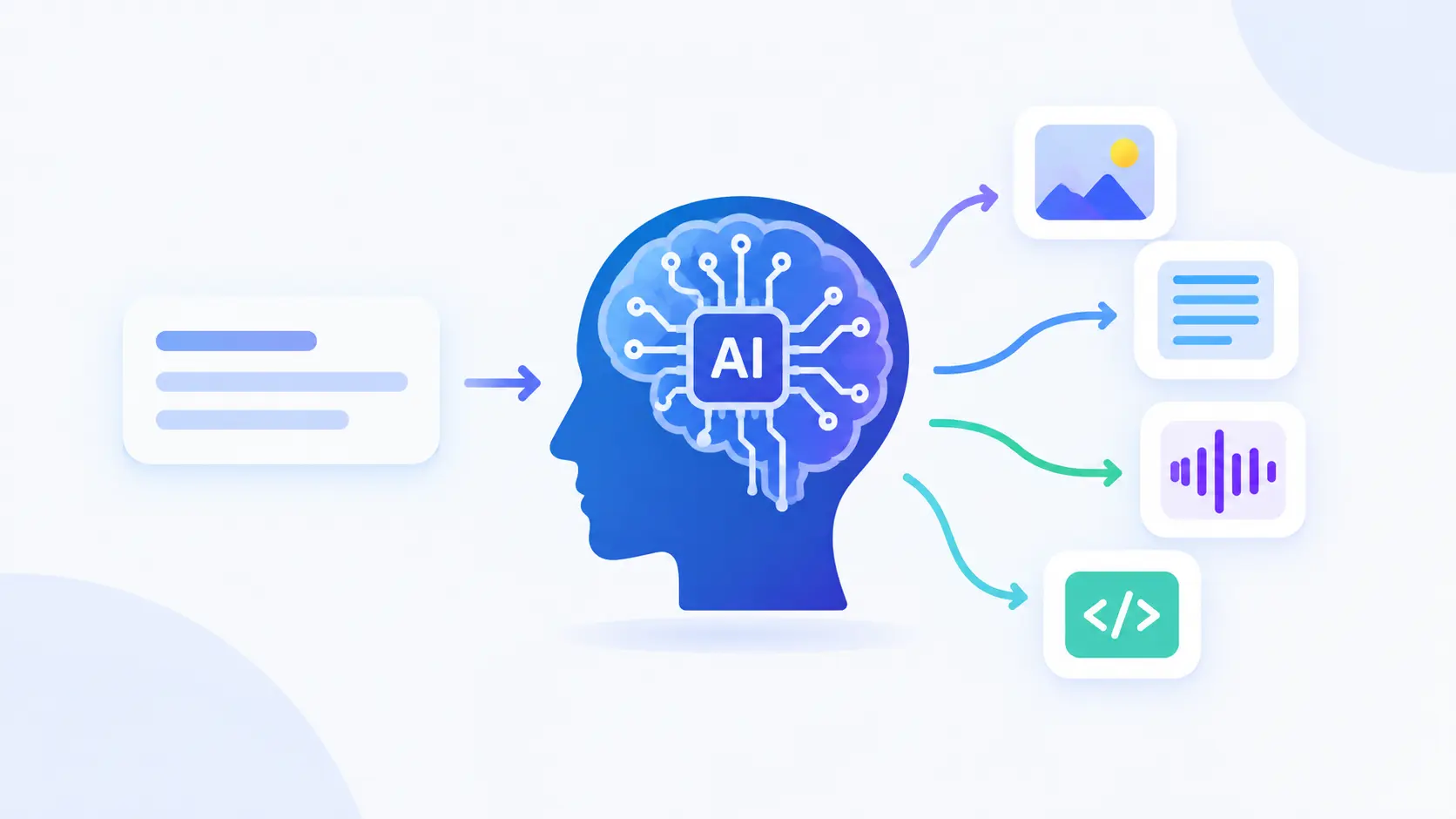
Generative AI is a type of artificial intelligence that can create new content based on patterns it has learned from existing data. Unlike traditional AI systems that mainly analyze information or make predictions, generative AI can produce text, images, audio, video, software code, and other types of content.
Popular examples include AI chatbots that generate written responses, image generators that create pictures from text prompts, and coding assistants that help developers write software.
The content generated by these systems is produced from patterns learned during training. The AI does not simply copy and paste information from its training data. Instead, it uses learned relationships and patterns to generate new outputs in response to a user’s instructions.
How Does Generative AI Work?
Generative AI systems typically rely on machine learning models trained on large amounts of data. During training, the model processes huge collections of examples and learns patterns within that data.
For example, a language model may be trained using large amounts of text. It learns relationships between words, sentences, concepts, and different forms of language. When a user enters a prompt, the model uses what it has learned to predict and generate a suitable sequence of text.
Many modern generative AI applications use technologies such as transformers, neural networks, and deep learning.
For image generation, models can learn visual patterns from large collections of images and their associated descriptions. When a user enters a prompt such as “a futuristic city at sunset,” the system generates an image based on the relationships it learned between language and visual features.
Types of Generative AI
Generative AI can create several types of content, including:
Text: AI can write articles, summaries, emails, stories, and other forms of content.
Images: Image-generation systems can create illustrations, realistic scenes, artwork, and designs from text prompts.
Audio: Generative AI can produce speech, sound effects, and music.
Video: AI tools can generate or modify video content using text or other inputs.
Code: Coding assistants can generate programming code, explain existing code, and help developers solve technical problems.
Common Uses of Generative AI
Businesses and individuals are using generative AI in many different industries. Content creators can use it for brainstorming and drafting. Marketers can generate campaign ideas and advertising copy. Developers can use AI coding assistants to speed up certain programming tasks.
In customer service, generative AI can help create responses to common questions. In education, it can assist with explanations, summaries, and personalized learning materials.
Generative AI is also being used in design, research, software development, entertainment, healthcare, and many other fields.
Benefits and Limitations
One of the biggest benefits of generative AI is productivity. It can help people complete certain tasks faster and generate ideas more efficiently.
However, generative AI also has limitations. AI-generated information can sometimes be inaccurate or misleading. Models may produce incorrect facts, biased outputs, or content that requires human review.
Privacy, copyright, security, and responsible use are also important considerations when using generative AI.
The Future of Generative AI
Generative AI is continuing to evolve rapidly. Future systems are expected to become more capable of understanding different types of information and working across text, images, audio, video, and software.
For businesses and individuals, the key will not simply be using AI, but learning how to use it responsibly and effectively.
Conclusion
Generative AI is a powerful branch of artificial intelligence that can create new content by learning patterns from large datasets. From writing and image creation to coding and automation, its applications are expanding rapidly.
While generative AI offers significant opportunities, it is important to understand its limitations and verify important information. Used thoughtfully, it can become a valuable tool for improving creativity, productivity, and the way we interact with technology.